Last Updated :
July 22, 2025
Supriya Sarkar

AI in Biopharma: What's holding EU teams back from streamlining their presentations?

Discover why EU biopharma teams hesitate to use AI for presentations. Explore 3 key challenges and how modern AI tools could change the workflow.
AI in Biopharma

Today’s presentation challenges are not just about design—they’re about control, compliance, and context.

Across Europe’s biopharma and healthcare sector, teams face intense pressure: tighter regulatory timelines, evolving EU legislation, and increasingly high expectations from stakeholders. These stakeholders don’t just want clean slides; they demand clear, localized, scientifically sound, and compliant communication, fast.

To meet these rising expectations, many companies have turned to internal tools, agencies, or dedicated in-house teams. But here’s the question:

Do these internal solutions give you the control, data security, and industry context needed to meet today’s standards?

In most cases, they don’t.

Let's dive into the top three challenges and understand why internal solutions are just not the answer when it comes to delivering AI in biopharma presentations..

A- Biopharma data security compliance is non-negotiable

In the pharmaceutical and life sciences industry, protecting sensitive data has always been a priority. But with the rise of AI-powered pharma communication tools and increasingly complex global regulations, the stakes are even higher, especially in Europe.

A 2024 survey by Elsevier found that while most researchers in pharma and life sciences see AI as a positive development, 91% voiced concerns about the risk of exposing confidential data. The message is clear: data security is top of mind for the industry. And in the European biopharma data security compliance framework, it’s not just important—it’s mission-critical.

Here’s why:

  • Stricter regulations are raising the bar
    Europe’s regulatory landscape is evolving rapidly. With the rollout of the European Health Data Space (EHDS) and the ongoing implementation of the EU AI Act for pharmaceuticals, companies must now operate within a unified framework. This enables health data to be accessed and shared across EU member states while still meeting the highest standards of GDPR compliance and biopharma data security compliance.
    Biopharma teams must manage this complexity while also delivering information faster and more transparently than ever before.
  • Cross-border sharing introduces added risk
    The EHDS is designed to support collaboration and innovation by allowing data to move more freely within the EU. This means that presentations can involve multiple sources of sensitive data, viewed by stakeholders in different countries, each with its own interpretation of compliance requirements.
    Without a secure, well-governed platform, even simple actions like customizing slides or sharing updates can create serious exposure, making it challenging to maintain biopharma data security compliance.

Why do internal solutions fall short?

In this high-stakes environment, speed alone isn't enough. AI-powered tools must be built with security and compliance at the core.

Unfortunately, many internal systems still rely on workflows and tools that weren’t designed for today’s strict regulatory demands. They often lack access controls, encryption, audit trails, and basic ways of ensuring data security—a top concern for any stakeholder evaluating AI-powered pharma communication tools.

And the cost of getting it wrong? Under GDPR, fines can reach up to 4% of a company’s global annual revenue.

How modern tools like Prezent deliver on biopharma data security compliance:

Modern enterprise AI presentation tools are increasingly reliable and safe for biopharma because it is designed to meet the sector’s high bar for data security, regulatory compliance, transparency, and operational efficiency. Here’s why:

  • The best platforms are designed to align with evolving regulations like GDPR and the EU AI Act. This means compliance checks, documentation, and data controls are integrated into the workflow from the start, and not as an afterthought.
  • Reliable AI platforms use advanced encryption, access controls, user authentication, and audit trails to protect your information at every stage.
  • Unlike early AI tools that offered little visibility into how decisions were made, modern platforms are moving toward explainable AI. Clear audit trails and transparent outputs help teams understand and trust what the AI delivers—an essential factor in regulated industries like biopharma.

Prezent is one such platform, purpose-built for the needs of biopharma teams. It brings enterprise-grade security, with ISO 27001, SOC 2 Type II, and full GDPR/CCPA compliance. Hosted on secure AWS infrastructure, Prezent encrypts all data in transit and at rest, supports single sign-on and role-based access, and never uses customer content to train its AI. Regular audits, penetration testing, and continuous monitoring further ensure that sensitive information stays protected, making Prezent a trusted solution for secure and compliant presentation creation. 

B- Contextual content: Overcoming skepticism about AI’s industry alignment

While AI has made meaningful progress in automating and localizing content, European biopharma leaders remain cautious. Many express skepticism about the effectiveness of AI in biopharma presentations, especially its ability to reflect the industry’s technical, regulatory, and business complexities without significant human oversight. A report in IPT Online points out that, despite the rapid pace of AI innovation, it has “fallen short of transforming commercial life sciences.” It notes that real value is only realized when AI is combined with harmonized, high-quality data and strong compliance frameworks.

This reflects a broader concern across the biopharma industry: that AI tools alone often struggle to deliver the nuance needed for regulatory submissions, clinical trial communications, and investor presentations, where precision, context, and credibility are essential.

Why internal tools and agencies struggle

Many internal tools, teams, and external agencies still rely on static templates and manual content creation. This approach may have been effective in the past, but it is no longer adequate for fast-paced, highly regulated industries like biopharma, where regulations evolve quickly, scientific insights advance constantly, and stakeholder expectations continue to rise. Without the ability to integrate real-time industry data, regulatory updates, or scientific best practices, it becomes difficult to ensure that every presentation is accurate, compliant, and tailored to its audience. This manual process is not only time-intensive, but it also raises the risk of inconsistencies or outdated content, which can compromise both compliance and credibility.

How advanced AI tools bring context to biopharma communication:

The latest AI-powered pharma communication tools are designed with industry-specific insight. That’s why advanced tools now use domain-specific large language models (LLMs) trained on biopharma literature, regulatory guidelines, and company-specific data. The result is content that’s not only scientifically accurate but also aligned with industry regulations and communication standards.

They offer features that help bridge the context gap:

  • Real-time regulatory and scientific updates: By integrating with trusted sources like the EMA, FDA, and scientific journals, the content stays current and relevant.
  • Templates built for the industry: Pre-built presentation frameworks are tailored for AI in biopharma presentations, such as clinical trial reporting, regulatory submissions, and investor updates.
  • Context-aware content generation: AI engines adapt their output based on the target audience, regional compliance requirements, and communication goals, delivering content that resonates.
  • Human-in-the-loop workflows: Subject matter experts can easily review and refine AI-generated content, ensuring that accuracy and credibility are never compromised.
  • Continuous learning: These platforms evolve over time by learning from user input and industry developments, helping teams stay aligned with the latest standards and expectations.

Prezent’s AI engine, Astrid, brings contextual intelligence to the forefront—helping biopharma teams create content that truly reflects the industry’s technical, regulatory, and business needs. Unlike generic AI tools, Astrid is built on Specialized Presentation Models (SPMs), trained specifically on biopharma communication standards, scientific language, and compliance frameworks. The result? Every slide is not just accurate—it’s also relevant, compliant, and tailored to the audience.

C- Personalized pharma presentations: Meeting high expectations with limited bandwidth

Personalized pharma presentations AI is a necessary innovation in the EU. Biopharma teams across Europe are under growing pressure to deliver presentations that resonate with a wide range of stakeholders—regulators, clinicians, investors, and internal teams—each with distinct expectations and priorities.

Here’s why personalization at scale is such a challenge:

  1. Complex regional landscape: Unlike in the U.S. or Asia, Europe’s fragmented markets, multilingual audiences, and layered regulatory requirements make it difficult to scale messaging efficiently. Add the fast pace of scientific development and rising demand for digital engagement, and the bar for tailored, accurate communication gets even higher.
  2. Turning complexity into clarity: Translating dense medical and scientific information into presentations that non-technical audiences can easily understand is no small task. Teams must strike a careful balance, keeping the content scientifically sound while ensuring it’s clear and engaging.

The result? Traditional “one-size-fits-all” workflows simply can't adapt to the demands of personalized pharma presentations.

Still, for many organizations, scaling that level of personalization, without increasing costs or slowing down delivery, remains a major challenge.

Why do internal solutions fall short? 

As mentioned earlier, many internal teams and agencies still rely on static templates, siloed content libraries, and manual customization to build presentations. While these approaches may have worked in the past, they now create significant bottlenecks when it comes to personalization and efficiency.

They’re slow, labor-intensive, and often lead to inconsistent messaging or missed opportunities to engage the audience. Most internal systems simply aren’t built to:

  • Adapt content automatically based on audience type or local regulatory needs
  • Integrate real-time data or scientific updates
  • Support seamless collaboration across teams and time zones

AI-powered platforms enable personalization at scale

Today’s leading AI-powered communication platforms are designed specifically with these challenges in mind, particularly for industries like biopharma, where precision, speed, and personalization matter most.

  • Automated personalization at scale: AI can instantly tailor tone, messaging, and visuals to match the needs of different audiences, eliminating the need for repetitive manual work.
  • Smarter content building blocks: Modular, AI-curated content libraries let teams quickly assemble presentations using pre-approved, context-aware sections. This ensures consistency, reduces duplication, and speeds up review cycles.
  • Seamless collaboration: Cloud-based tools enable real-time editing, version control, and easy access to shared templates and examples, making it easier for global teams to stay aligned.
  • Efficiency where it matters most: By automating repetitive tasks and enabling dynamic personalization, these platforms save hours, sometimes days, on presentation creation, giving teams more time to focus on strategy and storytelling.

Prezent’s Communication Fingerprint feature tackles the challenge of personalization and scale head-on. It identifies each user’s unique communication style and automatically tailors presentations to fit, without requiring extra manual effort. This AI-driven approach helps teams create hyper-personalized, company-branded decks for any audience in a fraction of the time.

What makes Prezent stand out is its ability to scale this level of personalization across large teams. Instead of starting from scratch every time, users can quickly adapt existing presentations for new audiences, eliminating guesswork and time-consuming edits. As a result, teams build personalized pharma presentations with AI up to 90% faster than manual methods.

Prezent: Setting the standard for AI in biopharma presentations

The challenges in biopharma are complex: fragmented digital systems, evolving regulations, and the constant need to tell clear, compelling stories across highly specialized audiences.

Navigating the complexity of today’s biopharma communication takes more than traditional tools or generic AI—it requires a solution built keeping in mind the scientific and business realities of the industry. That’s what Prezent delivers.

Trained in the language and logic of healthcare, Prezent’s AI engine, Astrid, helps biopharma teams to create precise, compliant, and audience-specific presentations at scale. Real-world case studies show its impact across the biopharma value chain, from accelerating drug development milestones to supporting successful market launches.

Want to see what true AI-powered pharma communication tools can do? Book a demo or start your free trial today—experience the future of AI in biopharma presentations.

Ready to create impactful presentations?

Try for free
No items found.
No items found.
Related resources

BLOG
Supriya Sarkar
April 1, 2026
The best B2B AI tools for enterprise teams: Features, pros and cons, pricing, and use cases
Find the best B2B AI tools for enterprise teams. Evaluate features, pricing, pros and cons, and use cases to choose tools that fit your workflows and deliver measurable impact.
BLOG
Niyati Mahale
April 1, 2026
11 best Genspark AI alternatives I tested for 2026
This guide covers the best Genspark AI alternatives for content, SEO, and presentations. Compare features, pricing, and real-world usability to find the right tool.
BLOG
Supriya Sarkar
April 1, 2026
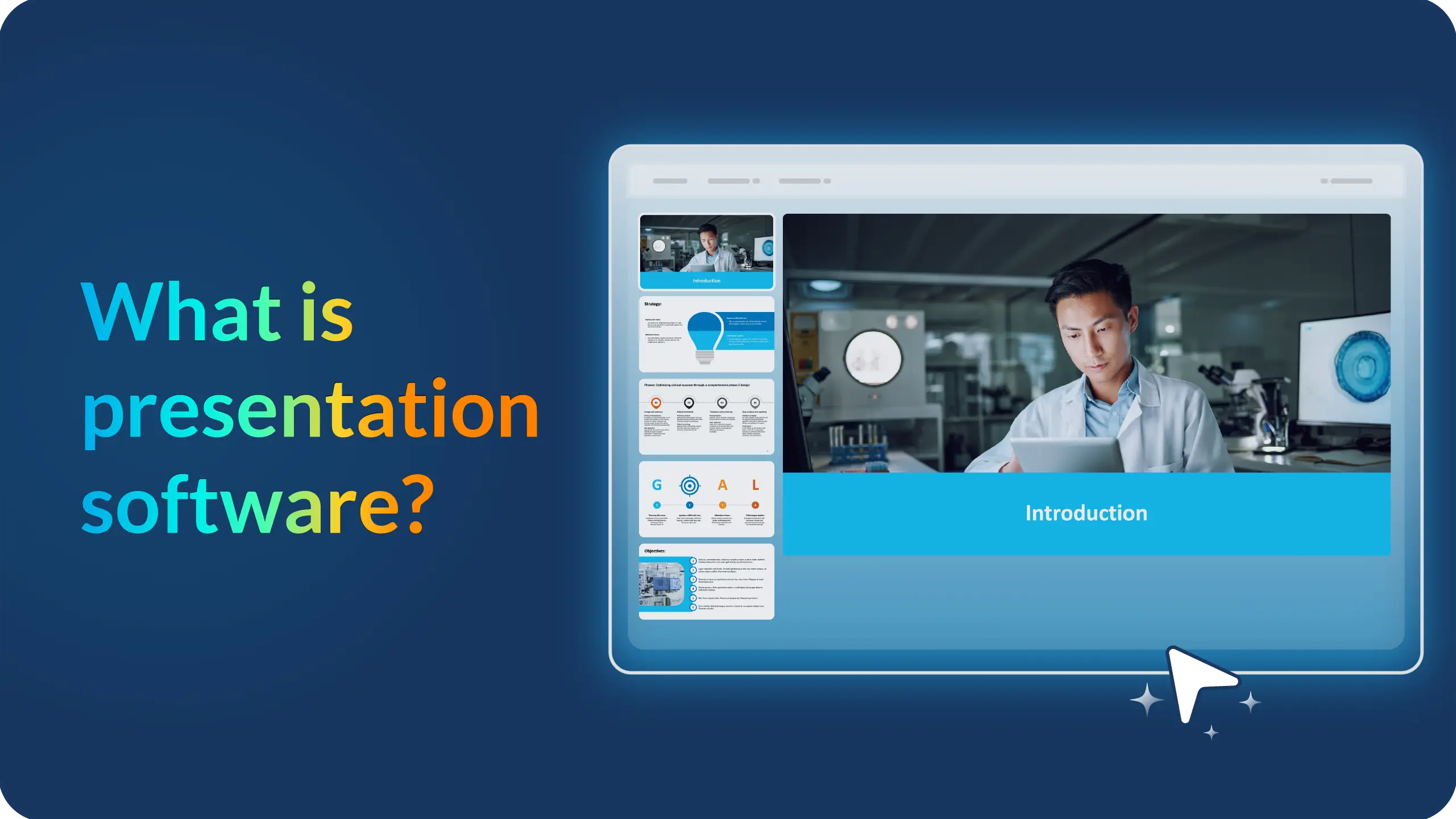
What is presentation software? A complete guide to how it works, what to look for, and how to choose the right one
What is a presentation software? This guide explains how it works, key features to look for, and how to choose the best presentation software.
BLOG
Supriya Sarkar
March 31, 2026
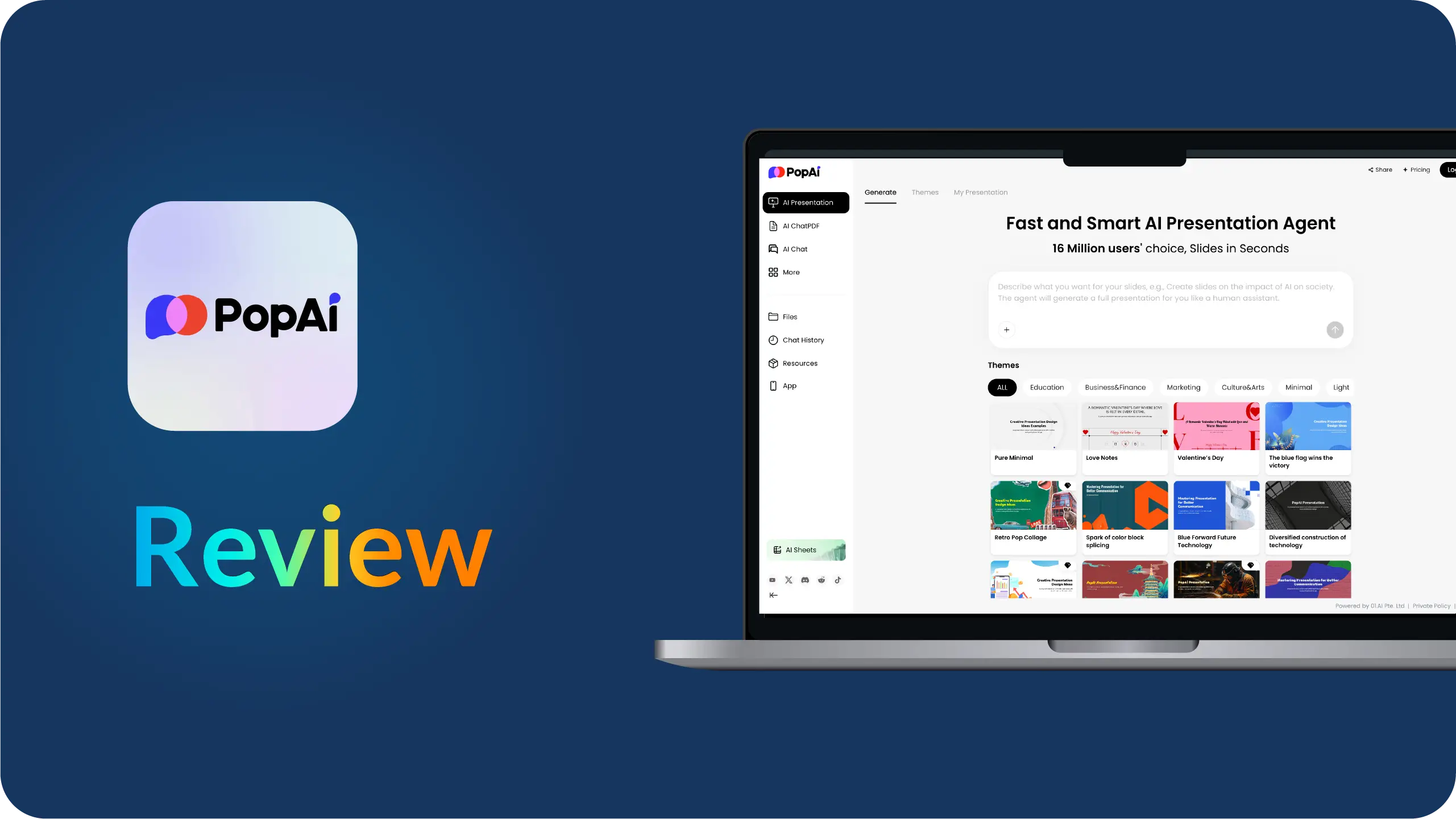
PopAI review: Complete breakdown of features, pricing, and alternatives
PopAI review: Is this AI tool right for business presentations? Explore features, pricing, limitations, and enterprise alternatives.
BLOG
Niyati Mahale
March 27, 2026
Microsoft Copilot review for presentations: features, pricing & limitations
Explore Microsoft Copilot’s features, pricing, and limitations for presentations. See how it performs and whether it fits your workflow.
BLOG
Niyati Mahale
March 27, 2026
Adobe Review (2026): Is Adobe InDesign Worth It for Business Use?
This Adobe review evaluates Adobe InDesign’s features, pricing, and usability. See how it performs for business workflows and where it falls short.
BLOG
Niyati Mahale
March 27, 2026
Best AI Pitch Deck Generators in 2026 (Tested & Reviewed)
I tested the best AI pitch deck generators to see which tools actually help you build clear, structured, and convincing pitch decks faster.
BLOG
Supriya Sarkar
March 26, 2026
10 Best PopAI alternatives: Compare features, AI capabilities, pricing, and free plans
Find the best PopAI alternatives and AI presentation makers. Compare AI features, pricing, and free plans to create smarter, more professional presentations.
BLOG
Niyati Mahale
March 27, 2026
Best Plus AI Alternatives in 2026: Top 8 AI Presentation Tools
I tested the best Plus AI alternatives to see which tools actually create presentation-ready decks. Here are the top AI presentation tools worth using in 2026.
BLOG
Supriya Sarkar
March 27, 2026
Nano Banana review: Evaluating strengths, workflow gaps, and AI solutions for enterprise presentations
Nano Banana review for enterprise presentations. Explore visual strengths, identify workflow gaps, and see how teams use AI to build faster, executive-ready presentations.
BLOG
Niyati Mahale
March 27, 2026
11 Best SlideShare Alternatives for Sharing Presentations
Explore the best SlideShare alternatives for creating and sharing presentations. Compare tools for hosting, collaboration, design, and presentation analytics.
BLOG
Niyati Mahale
March 23, 2026
Beautiful.ai Review (2026): Features, Pricing, Pros & Cons
An in-depth Beautiful.ai review covering features, pricing, pros, and limitations to help you decide if it’s the right presentation tool for your needs.
Free 14-Day Trial*

Customized On-Boarding*