If you're leading a team in the pharmaceutical industry today, chances are you're navigating two realities at once.
On one hand, your organization is pushing the boundaries of innovation by enhancing drug discovery, advancing clinical trials, and analyzing vast datasets. On the other hand, shrinking timelines, rising compliance demands, and the constant pressure to communicate insights clearly and quickly are stalling all your progress. The insights that should drive action are getting slowed down by delayed decks and approval cycles.
That’s why more teams are turning to artificial intelligence to help them bridge the gap between discovery and decision-making.
Today’s AI models go beyond accelerating drug discovery and diagnostics. They are quickly becoming essential tools for helping teams transform complex findings into clear, on-brand presentations. Because the faster teams can communicate findings, the faster they can act.
In this article, we’ve highlighted eight AI technologies that are built for pharma leaders like you. Tools that solve real problems across R&D, clinical, compliance, manufacturing, and communication without adding complexity to your workflow.
Let’s take a closer look at the platforms shaping the future of the pharma industry.
What are AI solutions for pharma?
AI solutions for pharma are specialized tools that use artificial intelligence to address the pharmaceutical industry’s most pressing challenges: speed, scale, compliance, and complexity. These AI models are built to support highly regulated, data-heavy environments where accuracy and speed matter.
By turning vast amounts of clinical data, patient data, and chemical and biological data into actionable insights, AI helps pharmaceutical companies improve efficiency and decision-making at every stage of the drug discovery process.
Here are just a few instances where AI in pharma is making a measurable impact:
Predictive analytics: Analyzing vast datasets to identify new drug targets and forecast outcomes.
Accelerating drug discovery: Using AI algorithms to evaluate compound interactions, prioritize potential drug candidates, and reduce development costs before wet-lab experimentation.
Clinical trials: Leveraging clinical trial data, genomics, and real-world evidence to improve patient recruitment, optimize site selection, and adapt protocols in real time.
Pharmacovigilance & drug safety: Mining EHRs, scientific literature, and historical clinical trial data to detect adverse events faster and ensure regulatory compliance.
Compliance automation: Streamlining drug development processes with AI that flags gaps in SOP updates, CAPA workflows, and regulatory submissions.
Manufacturing & supply chain: Monitoring quality control processes and the pharmaceutical supply chain to predict deviations, ensure drug efficacy, and minimize downtime.
Transforming communication: Using tools like Prezent helps transform trial outcomes, clinical updates, and regulatory summaries into clear, compliant decks.
In short, AI is helping pharmaceutical companies reduce manual work, uncover insights faster, and stay ahead.
Why pharma companies are embracing AI
Timelines are tighter, pipelines are fuller, and the cost of inefficiency (whether in R&D, manufacturing, or stakeholder communication) is higher than ever. AI offers a way forward.
It’s not about replacing human expertise. It’s about extending it. Here’s why AI adoption is accelerating across the pharmaceutical industry:
Speed to insight: Advanced AI models can analyze clinical, genomic, and biological data in minutes, accelerating go/no-go decisions and reducing delays in the drug development process.
Improved accuracy: By automating repetitive tasks such as data entry and quality control, AI reduces human error, enhances drug safety, and ensures consistent reporting across global teams.
Stronger compliance: From monitoring clinical trial data to managing regulatory submissions, AI keeps documentation audit-ready and aligned with evolving international standards.
Scalability: Whether managing supply chain complexity or coordinating multi-country manufacturing, AI solutions scale workflows without scaling teams.
Better collaboration: By making insights accessible across R&D, medical, regulatory, and commercial functions, AI ensures data doesn’t stay siloed but drives smarter decision-making across the organization.
As more pharmaceutical companies adopt digital-first strategies, AI in pharma ensures that digital transformation is not just about infrastructure but also about smarter workflows.
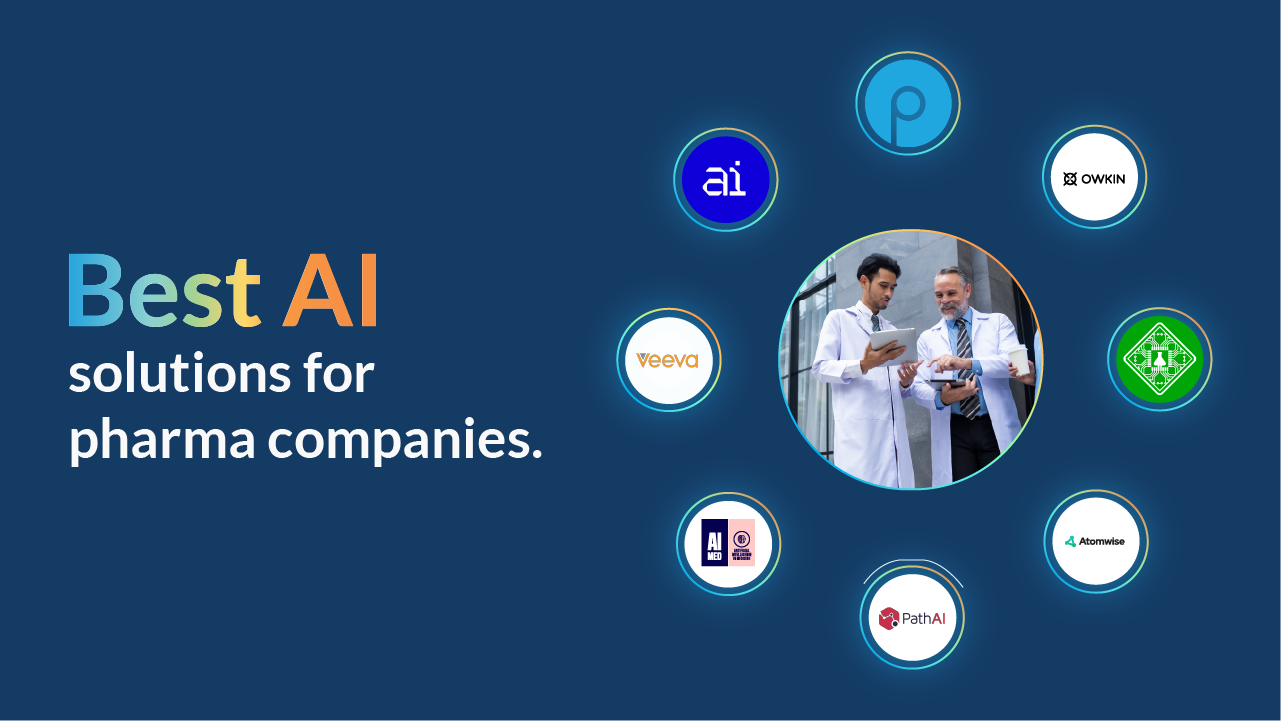
8 leading AI solutions for pharma companies in 2026
AI in pharma is no longer a nice-to-have; it’s becoming a core part of how teams operate. But choosing the right tools can feel overwhelming. From molecule modeling to message delivery, there’s a growing ecosystem of AI solutions built specifically for the pharmaceutical industry's unique challenges. The key is knowing which platforms solve what, and how they can actually move the needle inside your organization.
The list below highlights eight enterprise-ready AI tools that are already helping pharmaceutical companies accelerate discovery, stay compliant, and communicate with more clarity and speed.
1. Prezent: For AI-enhanced reporting & communication in pharma
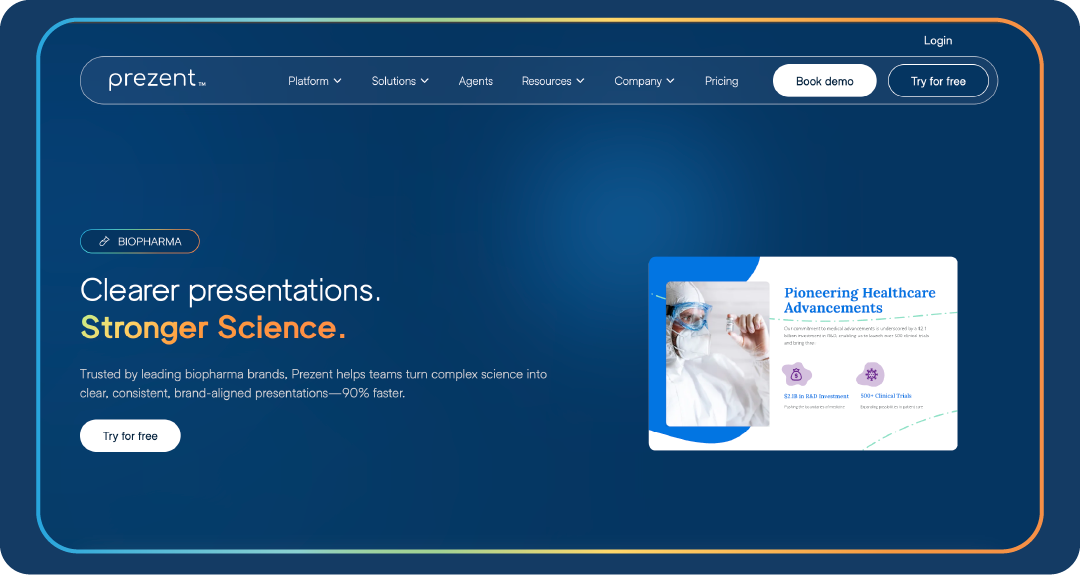
Prezent is an enterprise-grade AI platform that transforms how pharmaceutical companies communicate across clinical, regulatory, and commercial functions. Whether you’re summarizing complex trial results, preparing for regulatory review, or aligning global stakeholders on launch plans, Prezent helps you create polished, on-brand presentations faster and with less friction.
At the center of the platform is Astrid, Prezent’s proprietary, contextual intelligence AI. It takes your rough inputs (notes, data tables, regulatory summaries) and instantly turns them into clear, structured presentations that follow brand guidelines, audience expectations, and scientific precision. The result? Better cross-functional alignment, reduced reliance on agencies, and faster time-to-decision.
Key features:
AI-powered Auto-Generator instantly transforms dense clinical data, regulatory summaries, research notes, and other complex information into clear, structured, brand-ready presentations in minutes
Access 35,000+ brand-compliant slides that are enterprise-approved and tailored for the pharma industry, ensuring every deck is consistent, compliant, and visually polished across markets
Built-in Story Builder with over 1,000 proven scientific and business frameworks to simplify complex narratives
Audience personalization with communication fingerprinting adapts tone, level of detail, and messaging style for different audiences—regulators, medical experts, executives, commercial teams and more
Template Converter updates off‑brand decks in seconds to meet current branding and compliance requirements
AI-powered Synthesis feature condenses complex datasets into concise, executive‑friendly insights
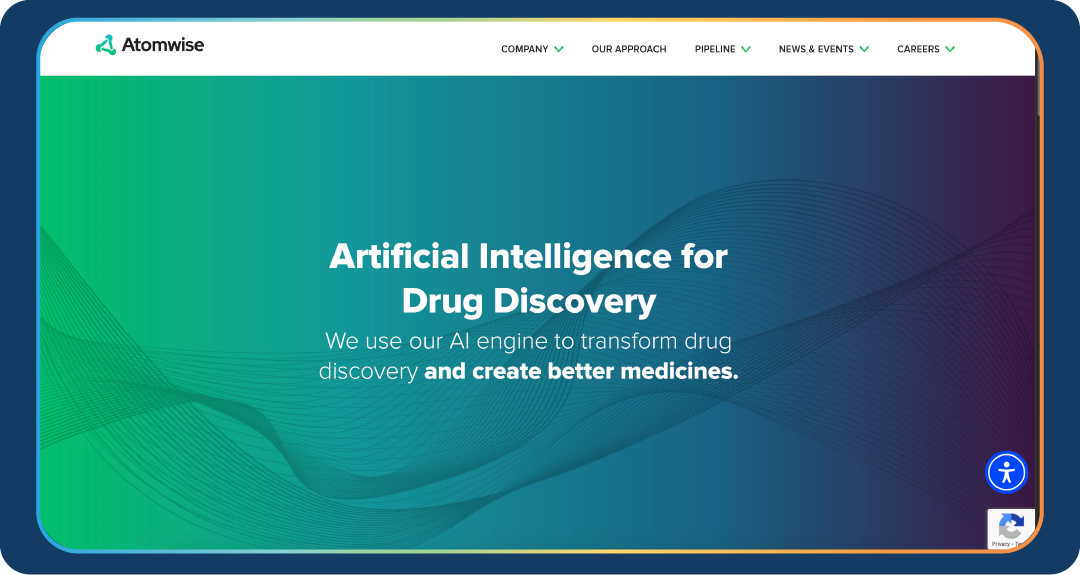
Atomwise applies deep convolutional neural networks (AtomNet®) to screen and identify promising small-molecule candidates, simulating molecular interactions at scale. Its AI enables much faster early-stage hit discovery, even for traditionally "undruggable" targets.
Key features:
Accuracy-enhanced 3D CNN models for binding affinity prediction across protein targets
Virtual screening of millions to billions of compounds
Fine-grained hit expansion and lead optimization tools
Scalable cloud-based architecture for rapid throughput
Continuous model retraining for higher predictive accuracy over time
Use cases:
Prioritize high-confidence compounds from large chemical libraries for preclinical testing
Achieve early lead hits against difficult targets such as allosteric or protein-protein interactions
Streamline hit-to-lead progression and reduce physical assay waste
Support disease area programs in oncology, neurology, and infectious disease
Enable pharma partners to reduce early-stage research cost and time significantly
3. Insilico Medicine: AI‑powered target identification & pharmaceutical research
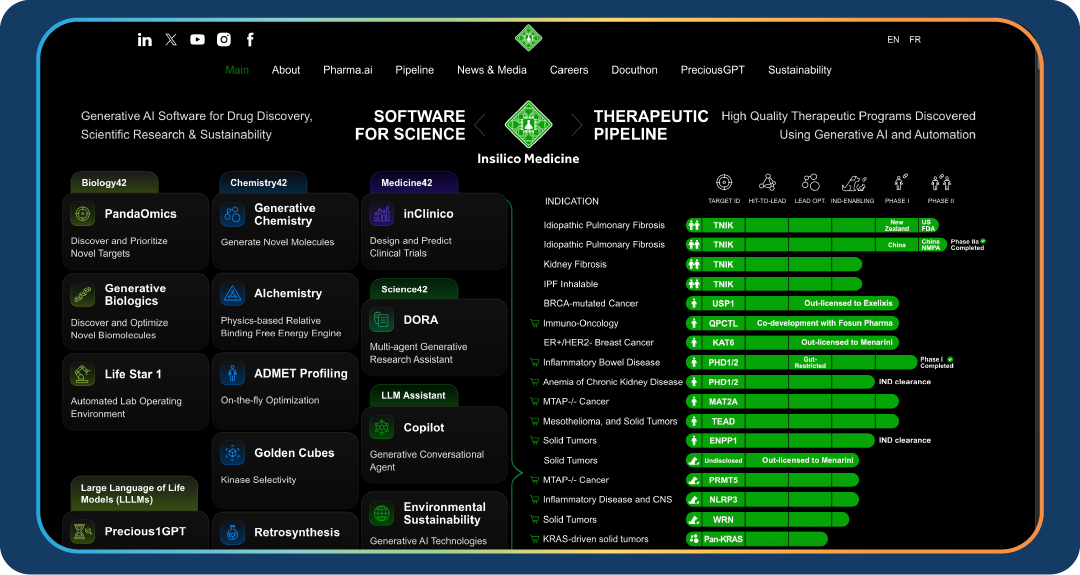
Insilico’s Pharma.AI platform includes PandaOmics™ for target discovery and Chemistry42™ for generative molecule design. Together, they enable end‑to‑end, AI‑driven early drug development, from selecting targets to proposing candidate molecules.
Key features:
Multi‑omics target ranking (PandaOmics) using biological relevance filters
Chemistry42 generative AI for designing novel, drug-like molecules
Reinforcement learning with expert feedback for lead refinement
Manuscript drafting assistant (DORA) for grant or paper writing
Rapid model iteration, enabling fast pivots between target and chemistry hypotheses
Use cases:
Discover novel therapeutic targets with validated biological and safety profiles
Generate candidate drug molecules for fibrosis or oncology pipelines
Reduce design-to-IND timelines by iterative AI chemistry workflows
Support scientific writing for internal submissions or external publications
Enable lean R&D teams to accelerate innovation across therapeutic modalities
4. Owkin: AI for clinical trials & biomarker discovery
Owkin integrates patient data across omics, imaging, and pathology to support predictive modeling, adaptive trial designs, and biomarker validation. Its federated learning models allow pharma teams to collaborate securely across institutions.
Key features:
Federated learning for privacy-preserving model training using multi-site patient data
Integrated biological, imaging, and clinical features for biomarker discovery
Predictive algorithms for patient subgroup stratification
Tools for disease progression modeling and treatment response forecasting
Use cases:
Design adaptive clinical trials with refined cohort selection to maximize statistical power
Identify digital or molecular biomarkers that predict efficacy or safety outcomes
Accelerate protocol development by simulating trial performance across virtual cohorts
Reduce patient drop-off and improve enrollment by aligning sites to match data profiles
5. Veeva Systems: AI for compliance & quality management
Veeva’s AI functionality is embedded within its Quality Cloud and Veeva Vault suites, helping regulated organizations streamline document workflows, MLR review, and CAPA management with AI-supported routing and trend detection.
Key features:
Intelligent agents that automate MLR routing and review workflows
Summarization of quality deviations and CAPA trends over time
Audit-ready content tagging and version tracking
Unified dashboards combining clinical, safety, regulatory, and commercial workflows
Use cases:
Accelerate promotional material approvals through faster MLR routing and feedback loops
Summarize recurring compliance deviations and track corrective actions proactively
Increase audit preparedness with consistent content versioning and traceability
Ensure alignment across global teams by centralizing regulated document workflows
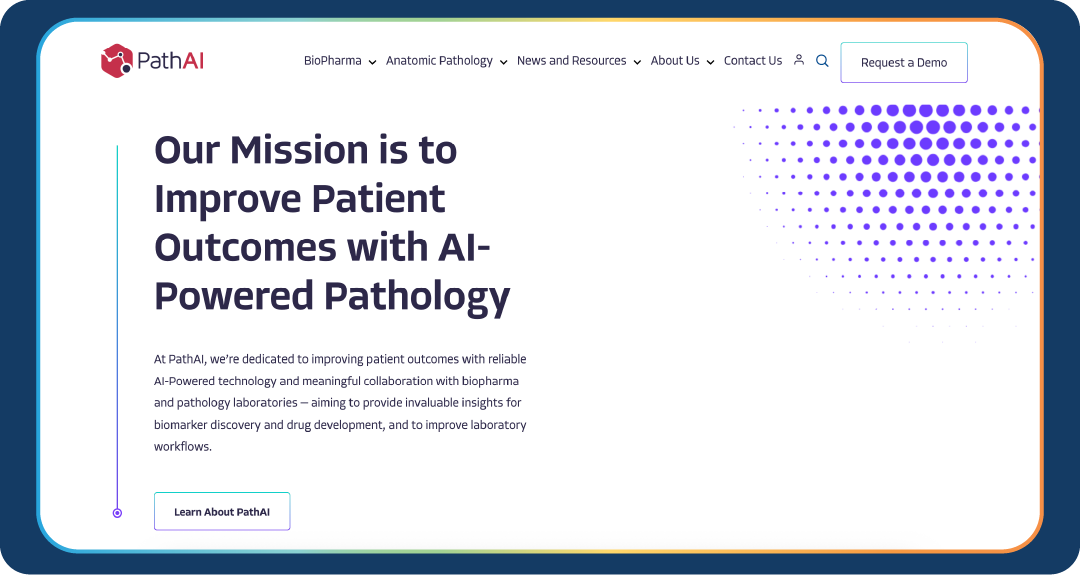
6. PathAI: AI for diagnostics & pathology
PathAI applies deep learning to digital pathology images to accelerate biopsy reading, biomarker quantification, and translational research. Its algorithms have been validated with clinical and academic partners for trial and diagnostic support.
Key features:
Automated slide annotation and classification using deep convolutional models
Quantitative biomarker scoring for research and trial applications
Cross-site normalization and validation across imaging modalities
Partner network enabling validation of AI models in real-world clinical workflows
Use cases:
Accelerate histopathology review and annotation in oncology trials
Quantify predictive biomarkers across cohorts to support trial endpoints
Reduce workload and variability in centralized pathology reading
Support diagnostic assay development and translational milestones
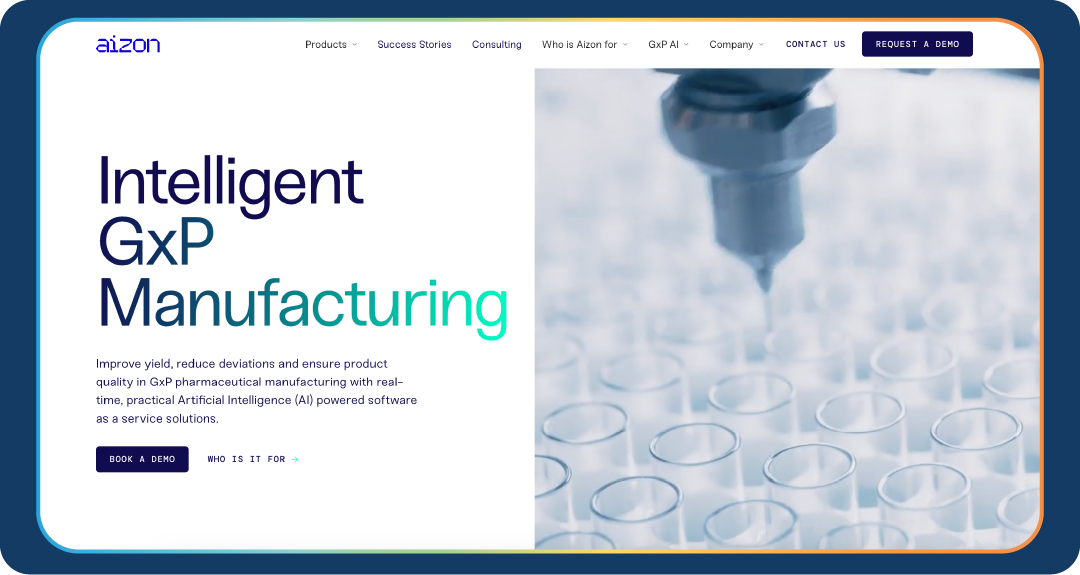
7. Aizon: AI for pharma manufacturing & process optimization
Aizon provides an AI platform for digitizing GxP operations, including electronic batch records (eBR), real-time analytics, and process deviation monitoring. It enables predictive quality and automated compliance across manufacturing lines.
Key features:
Electronic batch record execution and validation with automated workflows
Real-time deviation detection and CAPA tracking dashboards
Predictive alerts for batch yield issues or equipment failures
Centralized quality metrics for cross-site manufacturing oversight
Use cases:
Improve batch release times by catching process deviations early
Monitor equipment behavior and quality metrics across facilities in real time
Standardize operational workflows across global sites with validated procedures
Reduce rugged deviations and compliance risk in manufacturing operations
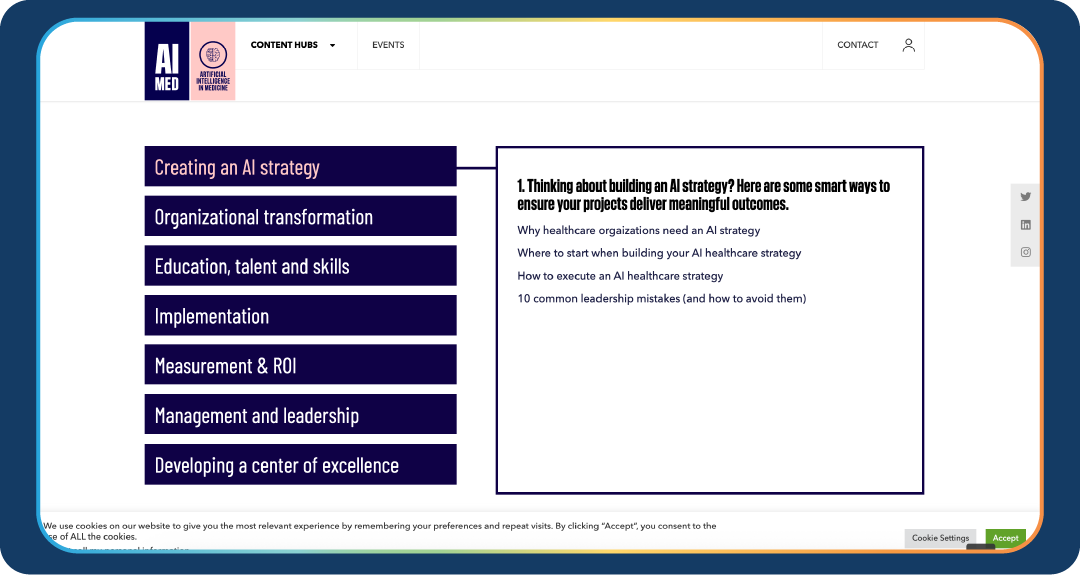
8. AIMed (Artificial Intelligence in Medicine): AI for supply chain optimization
AIMed applies machine learning and predictive analytics to optimize demand forecasting, risk mitigation, and logistics across pharma supply chains. It helps reduce stockouts, expiration waste, and supplier-related delays.
Key features:
Demand forecasting tailored for pharma seasonal trends and regulatory fluctuations
Risk modeling for supply delays, logistic disruptions, or inventory expiry
Visualization tools for tracking inventory flows, lead times, and replenishment alerts
Use cases:
Anticipate and prevent stockouts of critical drug products across regions
Adjust procurement and production plans based on predictive supply disruptions
Optimize inventory turnover and reduce expiry-related losses
Improve supply flow coordination between manufacturing sites and distributors
Powering pharma innovation with AI solutions
As the pharmaceutical industry continues to adopt AI across the value chain, the focus is shifting from experimentation to integration. AI is now embedded in core functions, driving faster discovery, enabling smarter clinical trial design, and helping manufacturing teams operate with greater precision.
The common thread across these advancements is the need to share information clearly and quickly with cross-functional teams, external stakeholders, and regulators. When timelines are compressed and the stakes are high, the ability to communicate effectively becomes just as important as the data itself.
That’s where AI-powered communication platforms like Prezent make a significant difference.
For many pharma teams, the challenge isn’t gathering insights; it’s making them understandable and shareable. Prezent eliminates the friction that often slows down communication. No more waiting for designers to polish slides or scrambling to align messaging with brand standards. Teams can create, align, and deliver impactful presentations in record time, without compromising on quality or compliance.
AI is enabling faster breakthroughs and safer treatments, but those achievements only matter when they’re understood and acted upon. From global team syncs to regulatory submissions, effective communication is what moves progress forward. With the right AI tools in place, pharma leaders can turn complexity into clarity, unlocking the full potential of their data, teams, and therapies.
Schedule a demo and see how Prezent can help your teams share insights with clarity, speed, and confidence.
Anoob is the Head of Content at Prezent with over 16 years of experience in marketing and content. He has worked with leading startups such as SocialPilot, Writesonic, BigBasket, FreshMenu, GupShup, and SimplyHired. Passionate about social media and digital tools, Anoob enjoys testing new platforms to help businesses make better marketing decisions. You can connect with him on LinkedIn.
The best B2B AI tools for enterprise teams: Features, pros and cons, pricing, and use cases
Find the best B2B AI tools for enterprise teams. Evaluate features, pricing, pros and cons, and use cases to choose tools that fit your workflows and deliver measurable impact.
11 best Genspark AI alternatives I tested for 2026
This guide covers the best Genspark AI alternatives for content, SEO, and presentations. Compare features, pricing, and real-world usability to find the right tool.
10 Best PopAI alternatives: Compare features, AI capabilities, pricing, and free plans
Find the best PopAI alternatives and AI presentation makers. Compare AI features, pricing, and free plans to create smarter, more professional presentations.
Best Plus AI Alternatives in 2026: Top 8 AI Presentation Tools
I tested the best Plus AI alternatives to see which tools actually create presentation-ready decks. Here are the top AI presentation tools worth using in 2026.
Nano Banana review: Evaluating strengths, workflow gaps, and AI solutions for enterprise presentations
Nano Banana review for enterprise presentations. Explore visual strengths, identify workflow gaps, and see how teams use AI to build faster, executive-ready presentations.
11 Best SlideShare Alternatives for Sharing Presentations
Explore the best SlideShare alternatives for creating and sharing presentations. Compare tools for hosting, collaboration, design, and presentation analytics.
An in-depth Beautiful.ai review covering features, pricing, pros, and limitations to help you decide if it’s the right presentation tool for your needs.
.jpg)